Building the teaching and technical capacity that allows scientific work to continue locally.
Programme remit
The Educational Outreach Imperative supports science teaching, technical fellowships, and the practical training needed to maintain a research facility. Awards serve schools, colleges, and institutions developing their laboratory capacity. Host organisations identify the teaching need and nominate the staff who will continue the work after the visiting team leaves.
The 2005 Education for All report places learning quality alongside access to education. For this programme, the distinction is concrete: supplying a microscope does not establish that students can prepare a slide, interpret an observation, or repeat an experiment without assistance.
Teaching and laboratory practice
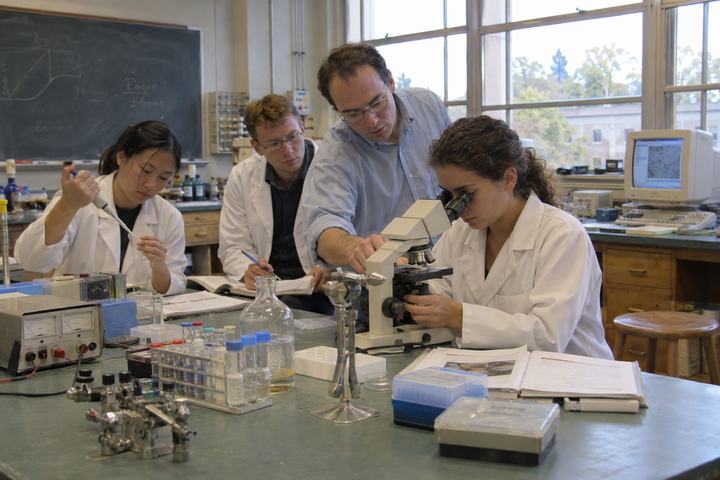
Projects develop practical exercises using equipment and materials that can be obtained locally. Training covers safe handling, measurement, written records, and the interpretation of uncertain results. Teachers test the exercises in their own classrooms and revise instructions where students encounter avoidable difficulties.
Technical fellowships include maintenance, calibration, stock control, and the diagnosis of common faults. A grant may fund spare parts and workshop time as well as new instruments. Equipment proposals must identify who will service the device and how consumables will be supplied once the award ends.
Access to scientific information
Partner institutions receive printed reference material and, where dependable connections are available, access to electronic teaching resources. Offline copies and locally retained manuals remain part of the programme. A course must not depend entirely on a connection that the host cannot maintain.
Materials are developed with local teachers and translated where necessary. Scientific terminology is checked through use in practical teaching, and the host retains the right to adapt the exercises to its curriculum.
Priorities for 2005
Current awards combine teacher development with modest laboratory improvements. Evaluation includes observed practical work, completion of exercises, and the continued use of equipment after training. Attendance at a workshop is reported separately from evidence of learning. Fellowship reports describe costs and maintenance requirements so that another institution can judge whether the method is workable in its own setting.